

Frans Coenen is a Professor of Computer Science with over 30 years’ experience in the fields of artificial intelligence, machine learning, and big data. His research spans a wide range of areas, from medical image analysis to the application of neural networks in disease diagnosis. In this article on liverpool1.one, we’ll take a closer look at Frans’ work, his academic achievements, and his impact on key areas of life in Liverpool.
Educational Achievements and Contributions to the Scientific Community
Born in the Netherlands, Frans Coenen later settled in the UK, where he began his career in computer science. His deep connection with Liverpool started at the University of Liverpool, where he became a Professor of Computer Science. Over his 30-plus years of academic work, Coenen has made a significant contribution to the development of artificial intelligence and machine learning, particularly through his innovative research focused on analysing unusual data sets, such as medical images and videos.
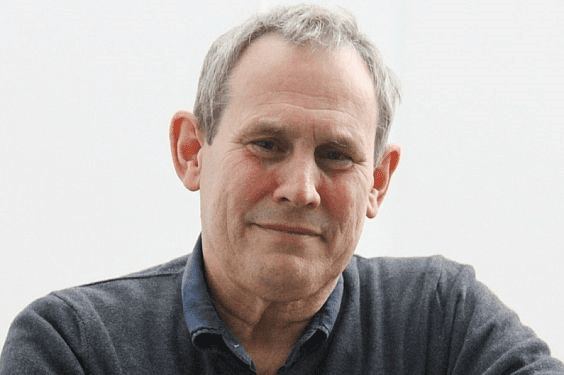
As a professor at the University of Liverpool, Coenen actively shapes new generations of computer science professionals. He founded the UK KDD (Knowledge Discovery in Data) series of scientific symposia, which are of national importance and bring together researchers from across the UK to share their expertise in big data and AI. These symposia have not only fostered scientific thought but also led to the creation of new technologies and methods that are changing the way we work with data today.
Coenen is also renowned for his teaching outside the UK. For example, he was once invited to Havana, Cuba, where he spent two weeks lecturing on machine learning to scientists at CENATAV. This is a testament to his recognition as a leading expert in his field, capable of effectively sharing his knowledge on an international level.
Frans Coenen’s Contribution to the Development of AI and Machine Learning
Frans Coenen is a distinguished scientist in artificial intelligence and machine learning, with a particular focus on Big Data. He is working on developing new methods for processing non-standard data, including the analysis of graphs, time series, text data, and medical images. Coenen’s scientific work has wide-ranging applications, from disease diagnosis to intelligent systems in the legal sector.
One of Coenen’s key projects is his research on medical image analysis using Convolutional Neural Networks (CNNs), which was featured in his academic paper, “Convolutional Neural Networks for Diabetic Retinopathy.” In this work, the researchers presented an innovative approach to the automated diagnosis of diabetic retinopathy, a serious complication of diabetes that can lead to blindness. The use of CNNs improved the accuracy and speed of disease detection, making a significant impact on healthcare practices.
Another notable achievement of Coenen’s is his work “A Survey of Frequent Subgraph Mining Algorithms,” which has become a vital resource for scientists working with graph data structures. This research focuses on finding frequent subgraphs in large datasets, with applications in various fields, from social network analysis to bioinformatics.
Coenen also works on the challenges of secure data analysis, particularly the use of encryption methods, such as order-preserving homomorphic encryption. This is essential for ensuring confidentiality when processing sensitive personal data. This research allows encrypted data to be analysed without the need for decryption, which is particularly important in healthcare and legal processes where confidentiality is non-negotiable.
In short, Frans’ academic work not only makes a significant contribution to the theoretical aspects of AI and machine learning, but also has practical applications in crucial areas like medicine and law.
The Impact of Frans Coenen’s Research on Key Sectors

Frans Coenen has been actively involved in numerous research projects that have had a direct impact on real-world sectors in Liverpool. His work in big data processing and analysis has been key to fields such as healthcare, law, and intelligent systems. One example is his research into medical imaging, especially in the context of diagnosing diseases like diabetic retinopathy. Coenen used convolutional neural networks to automatically analyse retinal images, which significantly improved diagnostic accuracy.
Another important area of his work is the development of tools for analysing legal documents, which helps to improve the decision-making process in the legal profession. His research, particularly on secure data analysis through encryption, has been applied to create systems that protect the confidentiality of legal information, allowing large datasets to be used effectively without the risk of a data breach.
Last but not least, in transportation. Coenen’s contribution lies in the development of intelligent agents used to optimise data from laboratory analytical instruments, which helps to improve the efficiency of urban systems, including transport planning and traffic management. His work has a significant impact on how Liverpool uses the latest technologies to improve its infrastructure and ensure the efficient functioning of urban processes.
As you can see, artificial intelligence has become very popular. In Liverpool, it’s also used for monitoring air pollution.