

Liverpool, a major city in England, is home to a vast array of schools, colleges, and other educational institutions. Many of these were founded during the Victorian era. Today, we’ll delve into the history of Liverpool College’s founding and its subsequent development. To find out more, visit the liverpool1.one website.
A Victorian Pioneer in Education
On 22 October 1840, the foundation stone for the future college was laid. The institution was established by a group of devout local Christians who believed that education should be combined with religious instruction. The college officially opened its doors to its first pupils in 1843.
The institution was originally comprised of three distinct schools: the Upper, Middle, and Lower Schools. Although these schools operated separately, they were all overseen by a single principal. The Lower School, also known as the Commercial School, was intended for boys. The Middle School focused on literary and scientific studies, as well as languages. The Upper School, meanwhile, was established as a public school.
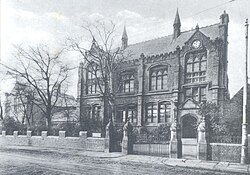
Liverpool College for Girls
As you may have gathered, the college initially only admitted boys. However, a decision was soon made to establish an institution for girls, and in 1856, Liverpool College for Girls was founded.
In 1894, a second girls’ school was established: Liverpool College for Girls, Huyton. This institution was created as a counterpart to the boys’ senior school. Just four years later, Liverpool College Preparatory School was opened in Fairfield. At this point, the Liverpool College Council was in charge of six different schools.
Later, in 1993, the girls’ college in Huyton merged with Liverpool College to create the co-educational day school that exists today.
The College’s Development
In 2010, Liverpool College became a boarding school, which opened its doors to international students. Three years later, however, the college officially became a state-funded academy. This transition meant that enrolment was limited to children from the UK and the European Union. For a time, Liverpool International College operated on the same campus as a separate, fee-paying school dedicated solely to educating international students.
The House System
Until 1992, the school was organised around a traditional house system, where pupils were allocated to different “houses” for competitions and community life. In 1992, the system was reorganised, and pupils were grouped by age instead. The Lower School, however, retained its houses, which were named after distinguished alumni, for many more years.
Then, in 2009, the college decided to bring back the old system. Four houses were re-established, and students gained access to a large common room within their house, providing a dedicated space to socialise, study, or relax.
The house system has been a cornerstone of British education for centuries and is still widely used today, not just in the UK but in schools all over the world. Pupils are divided into houses, fostering a sense of community and healthy competition. Above all, the system is designed to support students in receiving a high-quality education.
We hope you found this article informative and learned something new about the history of our city. What are your thoughts on the different systems of education? We’d love to hear your opinions in the comments below.