

The Bank of Liverpool was the city’s oldest local financial institution, founded in 1831. In December 1918, it merged with Martins Bank to become the Bank of Liverpool and Martins Ltd. Its head office was in Liverpool, at 7 Water Street. It later merged with other banks, which allowed it to become one of the largest financial organisations in the United Kingdom. Find out more at liverpool1.one.
Formation
At the time of the Bank of Liverpool’s founding, there were already seven private banks operating in the city, the most famous of which had been in business since 1773. The Bank of Liverpool might never have come into existence, but in 1826, Parliament passed an Act that limited the Bank of England’s monopoly on joint-stock banking to within a 65-mile radius of London, permitting the creation of new joint-stock financial institutions in the provinces.
In 1829, the first joint-stock bank with a head office in Manchester and a branch in Liverpool was established. This was the Manchester and Liverpool District Bank. However, local merchants regarded this move as a ‘real humiliation’, as Liverpool was a large enough city to have its own bank. So, in 1831, on the initiative of William Brown, the Bank of Liverpool was established with its head office located in the city.
The Early Years of Operation
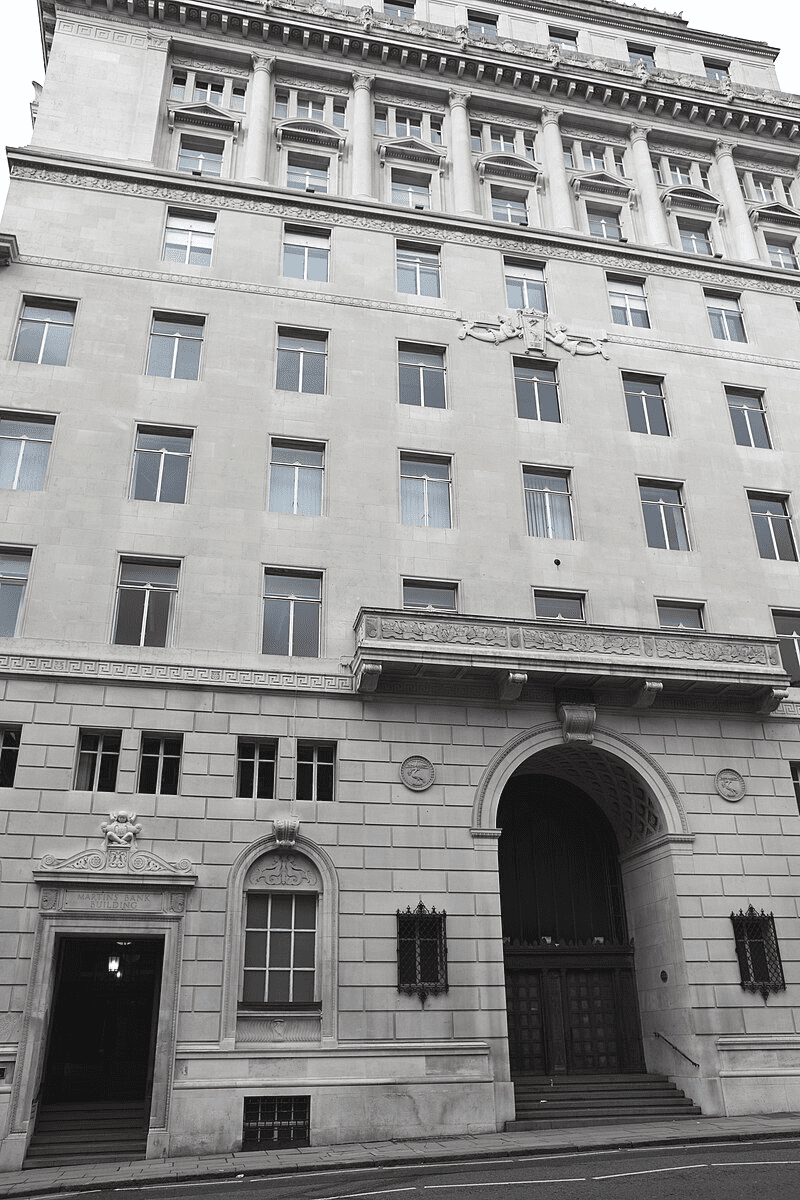
The shareholders of the Bank of Liverpool included both ordinary citizens and prominent figures, among them Lord Mayor Rathbone, the educator and biologist Bibby, the public figure and social reformer Booth, and the politician and businessman Hornby. The organisation’s chairman was William Brown, and the general manager was Joseph Langton. Immediately after opening, the bank was located in temporary premises on Brunswick Street. A little later, the management made the decision to purchase the Talbot Inn on Water Street. The head office moved there and remained at that location for the rest of its independent existence.
The main part of the bank’s business was connected with the cotton trade between Liverpool and North America. This profitable business, along with the prudent policies of its management, allowed the organisation to open numerous accounts in North American banks. Despite this, the joint-stock institution experienced frequent financial crises, the most serious of which occurred in 1837. At that time, only the support of the Bank of England allowed the organisation to stay afloat.
Overall, business went well, and the Bank of Liverpool remained profitable even in 1847, when another crisis led to the failure of one of the city’s largest banks, the Royal Bank of Liverpool. The American Civil War had a negative impact on the cotton trade, but even in this situation, the Bank of Liverpool was able to maintain its position.
The fact is, the directors adhered to a prudential approach, meaning they focused on reducing potential risks and were unwilling to take on the protection of limited liability. At the same time, their unlimited liability prompted the management to exercise the utmost caution. Eventually, however, in 1882, the joint-stock bank was converted into a limited liability company.
Expansion
After adopting limited liability, the Bank of Liverpool began to strengthen its position as a leading city bank by making a series of acquisitions of smaller financial organisations. In 1883, it acquired Arthur Heywood, Sons and Company; in 1889, the Liverpool Commercial Banking Company; and finally, in 1918, the large London-based Martins Bank.
Bank of Liverpool and Martins
After the purchase of Martins, the Bank of Liverpool began to strengthen its position in the north of Great Britain. The acquisition of the Palatine Bank in 1919 was a unique example of a Manchester-based bank being bought by a Liverpool financial institution.
In 1920, a regional Yorkshire bank, founded in the late 1700s, was acquired; at the time of the purchase, it had 17 branches. In 1928, the Bank of Liverpool made its largest regional deal, buying the Lancashire & Yorkshire Bank. It also continuously grew its branch network by acquiring small and medium-sized financial organisations.
Martins Bank

By 1930, the Bank of Liverpool and Martins had shortened its name to Martins Bank. By then, it was already completing the construction of its new head office in Liverpool and was beginning to build an additional head office in London. In the south of Great Britain, new southern branches were being opened to complement the large northern network. The era of acquisitions was over; the bank now set a course for increasing its number of branches. Between 1943 and 1956, for example, over 60 new branches were opened.
The End of an Era
For a long time, Martins Bank remained the only national bank with its head office outside London, but in 1969, it was itself the subject of a takeover. Initially, a three-way merger between Martins, Lloyds, and Barclays was planned, but the Monopolies and Mergers Commission vetoed the union, while not objecting to Barclays acquiring Martins Bank on its own. Thus ended the story of one of England’s largest financial organisations. The former Bank of Liverpool lost its independence, and all of its 700 branches were transferred to Barclays Bank.