

Many famous people started their careers in the city of Liverpool, and Frederick Smith is one of them. He was a prominent British barrister and Conservative politician who rose to become Lord Chancellor of Great Britain. Today, we’ll delve deeper into this remarkable individual, as he began his career right here in Liverpool. Find out more about Frederick Smith on the liverpool1.one website.
Early Life and Education
Frederick was born in 1872 in Birkenhead, Cheshire. He grew up in a large family, but only two of the five children survived. Frederick’s father first worked as a real estate agent before becoming a barrister and local politician. His father’s example likely inspired our subject to also pursue a career in law and politics.
Smith’s education began at Birkenhead School for Girls, followed by Sandringham School in Southport. He then won a scholarship to University College Liverpool, where he studied for four terms, before moving on to Wadham College, Oxford.
In 1896, Smith was awarded the Vinerian Scholarship in Law and was elected a Fellow of Merton College.
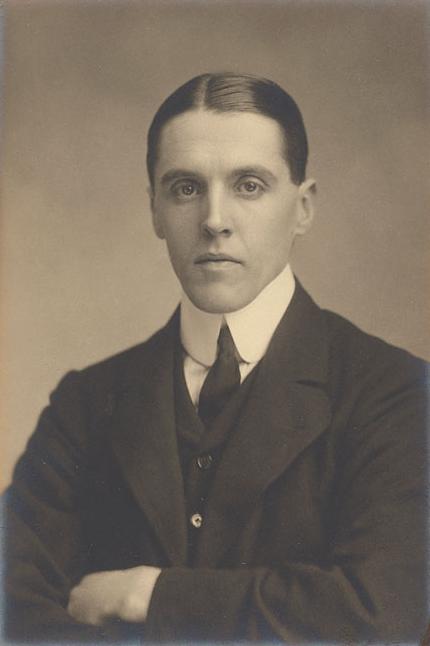
A Legal Career That Began in Liverpool
After Oxford, Smith began his career as a barrister in Liverpool, where he quickly built a reputation as a fine defence lawyer. Notably, Frederick Smith was a junior counsel during the prosecution of John McVeigh, who was tried by the Liverpool Assizes for the murder of activist John Kensit. McVeigh was acquitted.
In 1908, Lord Loreburn made Smith a King’s Counsel. He went on to become one of the country’s most prominent barristers. Smith was also one of the highest-paid lawyers, earning £10,000 a year.
More Than Just a Barrister: A Politician Too
Alongside his legal career, Smith also sought to get involved in politics. In 1903, he gave a speech in Liverpool in support of Joseph Chamberlain, who advocated for tariff reform. Thanks to his oratorical skills, Smith was selected as the candidate for the working-class constituency of Walton. He won the 1906 election and later became a leader of the Unionist wing of the Conservative Party.
The First World War broke out, but it didn’t hinder Smith’s career development. He joined the Territorial Army in the Queen’s Own Oxfordshire Hussars. Interestingly, this was the same regiment where Winston Churchill had served as an officer before the war began.
In 1918, Smith was awarded a baronetcy, and just a year later, he was appointed Lord Chancellor. At 47 years old, he was the youngest person to hold the post since Lord Cowper in 1707.
It’s worth adding that Frederick Smith played a crucial role in several key legal reforms, including the Law of Property Act of 1922, and he championed the reform of divorce laws. Additionally, the barrister and politician distinguished himself in the negotiations that led to the signing of the Anglo-Irish Treaty in 1921 and the creation of the Irish Free State.
As for his personal life, in 1901, the barrister married Margaret Eleanor Furneaux. The couple had three children.
Frederick Smith died of pneumonia in September 1930, at the age of 58.
It is said that Smith was a friend and political ally of Winston Churchill, which is one reason his work is so well-remembered.
That’s the story of the remarkable barrister and political figure Frederick Smith, who began his career in the city of Liverpool. We hope our article was informative and gave you some food for thought.