

The University of Liverpool is a prestigious higher education institution in Liverpool and across the UK. Today, we’re delving into the history of its Department of Archaeology, Classics and Egyptology. To find out more, read on at liverpool1.one.
Founding History
In 1904, John Garstang founded the Institute of Archaeology. It was the first centre in the country for the academic study of archaeological methods and practice, alongside Egyptology and Classical Archaeology. Robert Carr Bosanquet began teaching at the University of Liverpool in 1906, becoming the first holder of the Chair of Classical Archaeology. The university’s first Professor of Latin was John Percival Postgate, who taught from 1909 to 1920, while Percy Newberry was the first Professor of Egyptology.
Over the years, the department has grown and become increasingly popular with students. Today, its members conduct interdisciplinary research across a wide range of fields. These include Old World prehistory, human evolution and palaeoanthropology, bioarchaeology, environmental archaeology, archaeological materials, Egyptology, as well as the archaeology, languages, history, and culture of the Ancient Near East and the Mediterranean.
Since 2010, the department has been part of the School of Histories, Languages and Cultures, which is one of four schools within the Faculty of Humanities and Social Sciences. The School also includes the departments of History, Modern Languages and Cultures, Irish Studies, and Politics.
The department’s archaeological facilities were significantly expanded in 2015 with the creation of the Elizabeth Slater Archaeological Research Laboratories.
Overall, the department boasts an impressive range of facilities: the Garstang Museum of Archaeology; laboratories for stable isotope and palaeodietary studies, archaeobotany, lithics, atomic spectroscopy and trace element chemistry, and environmental sciences. Additionally, it has an ancient technologies workshop, a Centre for Manx Studies, and a scanning electron microscopy suite.
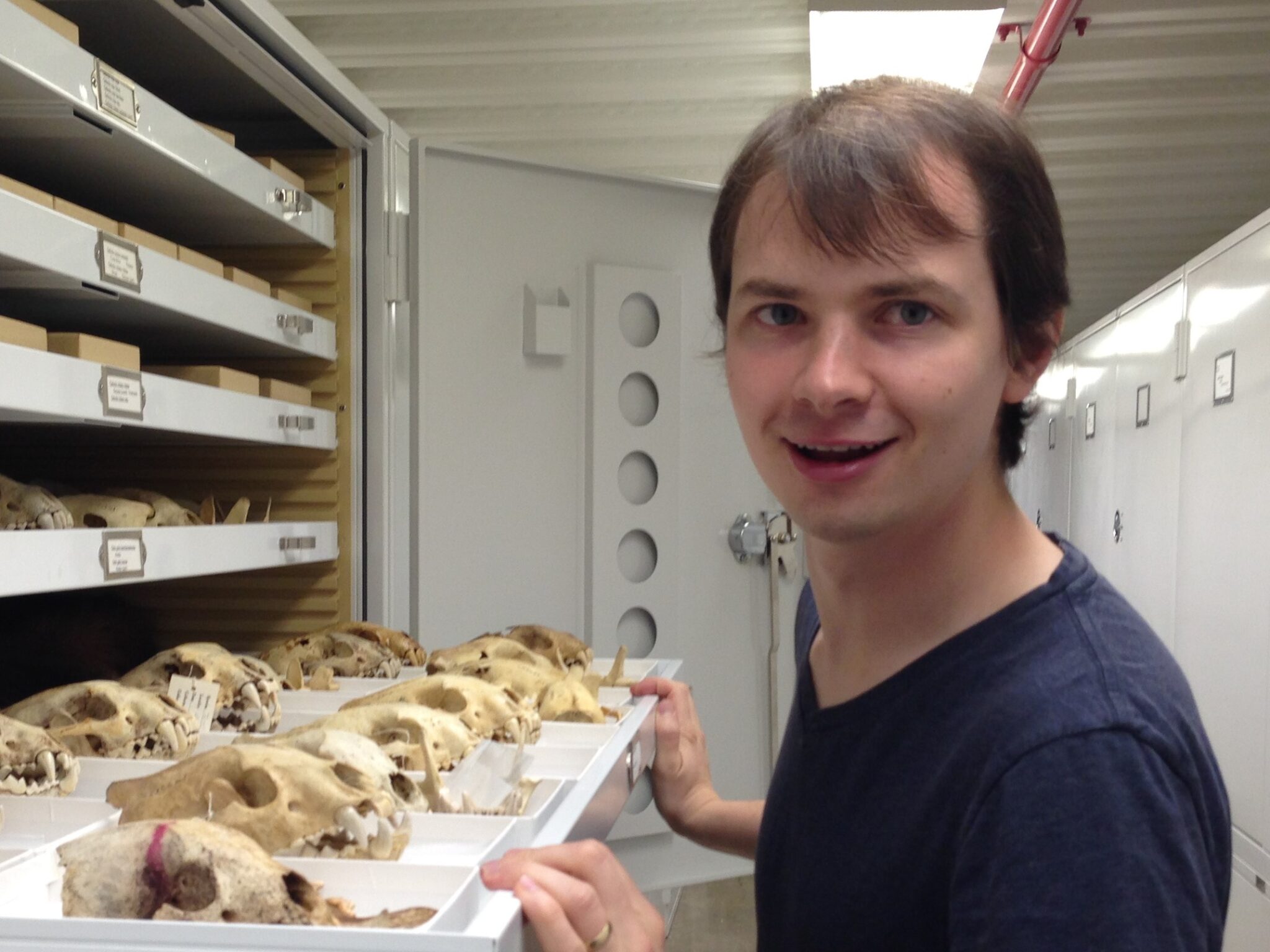
The Student Experience
Students can pursue both undergraduate and postgraduate degrees. In fact, the Department of Archaeology, Classics and Egyptology has the largest postgraduate community of any academic department within the Faculty of Humanities and Social Sciences, with over 70 researchers from the UK and around the world. Postgraduate researchers are also supported financially through scholarships provided by the Arts and Humanities Research Council (AHRC). In 2016, for example, the department secured five AHRC scholarships. In the same year, five Postgraduate Teaching Fellows were appointed in the fields of Prehistoric Archaeology, Egyptology, Archaeomaterials, Ancient Near East, and Classics, funded directly by the department.
Notable Academics
- Kenneth Kitchen is a biblical scholar, historian of the Ancient Near East, and the Brunner Professor Emeritus of Egyptology. He is also an Honorary Research Fellow in the School of Archaeology, Classics and Egyptology. Professor Kitchen specialises in the Ramesside and Third Intermediate Periods of Ancient Egypt and has written over 250 books and articles. He has been called “the architect of Egyptian chronology” and is a staunch defender of the historicity of the Old Testament, a subject he explored in his 2003 book, “On the Reliability of the Old Testament”.
- Alan Millard is the Rankin Professor Emeritus of Hebrew and Ancient Semitic Languages and an Honorary Senior Research Fellow in the School. Professor Millard is not just a theorist but a practical archaeologist, having worked on excavations at Tell Nebi Mend and Tell Rifa’at in Syria, Petra in Jordan, and the Assyrian capital of Nimrud in Iraq. While working at the British Museum, he discovered the “Epic of Atrahasis”. He is a Fellow of the Society of Antiquaries of London, a member of the Society for Old Testament Study, and formerly served as vice-chairman of the British School of Archaeology in Iraq.
- Arthur ‘Peter’ Shore was a British Egyptologist, academic, and museum curator who specialised in Roman Egypt and Late Antiquity. He served as the university’s Professor of Egyptology from 1974 to 1991. His main research interests were Fayum mummy portraits, the history of Christianity in Egypt, and the Coptic language.
- Elizabeth Slater was a British archaeologist and a leading specialist in archaeometallurgy. She was the first female Professor of Archaeology appointed by the University of Liverpool and held the Garstang Chair of Archaeology from 1991 to 2007. Elizabeth conducted analytical research on copper-based metals, ceramics, and other vitreous materials as part of major fieldwork and excavation programmes in the UK, Italy, Greece, Turkey, and Egypt. She was also keenly interested in experimental archaeology, participating in projects that studied the processes of transforming raw materials into finished artefacts.
- Frank Walbank was the Rathbone Professor of Ancient History and Classical Archaeology at the University. He left behind a significant body of published work, including “Aratos of Sicyon”, “Philip V of Macedon”, “The Awful Revolution”, “Polybius”, and the three-volume “A Historical Commentary on Polybius”.
We hope you found this exploration of one of Liverpool’s most distinguished academic departments interesting and informative.