

The dispute between Liverpool dockers and their employers, Mersey Docks and Harbour Company (MDHC) and Torside Ltd, has left an indelible mark on history. The conflict lasted for 28 months, from 1995 to 1998, in Liverpool. Today, we’ll take a closer look at this strike. Read more on the liverpool1.one website.
Background
In 1947, the National Dock Labour Scheme was established in Liverpool, responsible for regulating workers’ rights, pay, and training within a national register of dockers. The National Dock Labour Board was later created, comprising an equal number of representatives from trade unions and employers. In 1989, the scheme, which protected employment conditions, wages, and benefits, was abolished. This decision was met with resistance from trade unions, who even called a strike but were defeated. After the scheme was abolished, Mersey Docks took an aggressive stance in its relationship with its workers. In the 1980s, new rules were introduced requiring dockers to be available for work at any time, including weekends. The dockers’ living standards and income declined, and they were naturally unhappy with the situation.
Between 1989 and 1992, around 80% of dockers left the industry, and the number of workers in the period from 1989 to 1995 was reduced by more than half.
Additionally, individual dockers faced harassment and intimidation for various reasons, and by 1995, 170 had faced disciplinary proceedings. Health and safety standards were ignored, and the number of accidents increased.
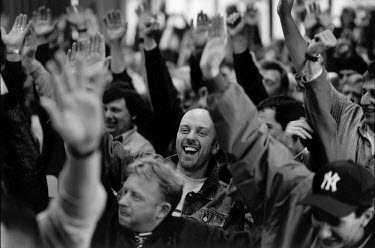
The Strike: Where It All Began
On 25 September 1995, a dispute arose between workers and the subcontractor Torside Limited. The conflict was over overtime pay. Five workers were fired. These five sacked dockers formed a picket line that their fellow Torside dockers refused to cross. As a result, the company fired another 80 employees.
Following this, workers directly employed by Mersey Docks also refused to cross the picket line in support of their fellow dockers. Consequently, 300 out of 380 dockers were sacked for breach of contract.
The dockers were surrounded by police and private security guards. The workers were also supported by well-known figures: musicians, footballers, and singers.
Local Members of Parliament tried to resolve the dispute, but the strike continued. Mersey Docks sent an offer of £10,000 per docker, but the offer was rejected.
Support from Trade Unions and Beyond
As mentioned above, the dockers were supported by celebrities. The leader of the Transport and General Workers’ Union, Bill Morris, also supported the strikers. He voted to create a fund to help them in their difficult circumstances and backed the promises of foreign trade unions to boycott vessels using Merseyside terminals.
It’s worth noting that during the strike, the Liverpool dockers ran a public campaign for their reinstatement. They united with dockers and support groups all over the world. In December 1995, sacked dockers even formed a picket line in New York.
The Liverpool dockers continued to receive offers. A representative from Mersey Docks proposed to reinstate 40 workers, with a compensation of £25,000 for the rest of the sacked workers.
In September 1996, a T-shirt was designed and printed to raise awareness of the strike. The T-shirt had the inscription: “300 Liverpool Dockers sacked since September 1995.” It was even worn by some celebrities, such as Robbie Fowler. The T-shirts were sold for £5, and the money went to support the dockers’ families.
Resolving the Conflict
In 1997, Tony Blair’s Labour government came to power, and there was great public hope for a resolution to the conflict in Liverpool. Unfortunately, this did not happen. The new government did not support the dockers.
That same year, Merseyside Police increased their presence, and 13 dockers were arrested.
In October 1997, Mersey Docks held a secret postal ballot and offered compensation of £28,000. Of the 310 dockers, only 97 agreed to accept the offer. As a result, 60 dockers accepted the company’s offer, while 258 continued to strike. The dispute had gone on for too long. Mersey Docks refused to negotiate further, stating that their offer of £28,000 was final. On 26 January 1998, the dockers accepted the settlement and agreed to the payout without reinstatement.
After the conflict was resolved, a few dockers bought a bar in central Liverpool called “Casablanca.” They renamed it “The Casa” and it opened in 2000.
In 2012, Unite the Union’s General Secretary, Len McCluskey, invited the sacked dockers back to the docks. The goal of this offer was to bring the unions back into the docks so that the sacked dockers could share their experience and knowledge with their colleagues in Liverpool.
It should be noted that the strike lasted for two and a half years, making it the longest dispute in the history of British industrial relations. The dockers’ strike did not achieve its goals, but it became a significant example of the trade union and social movement in the country.